01 / ATLAS
What it is
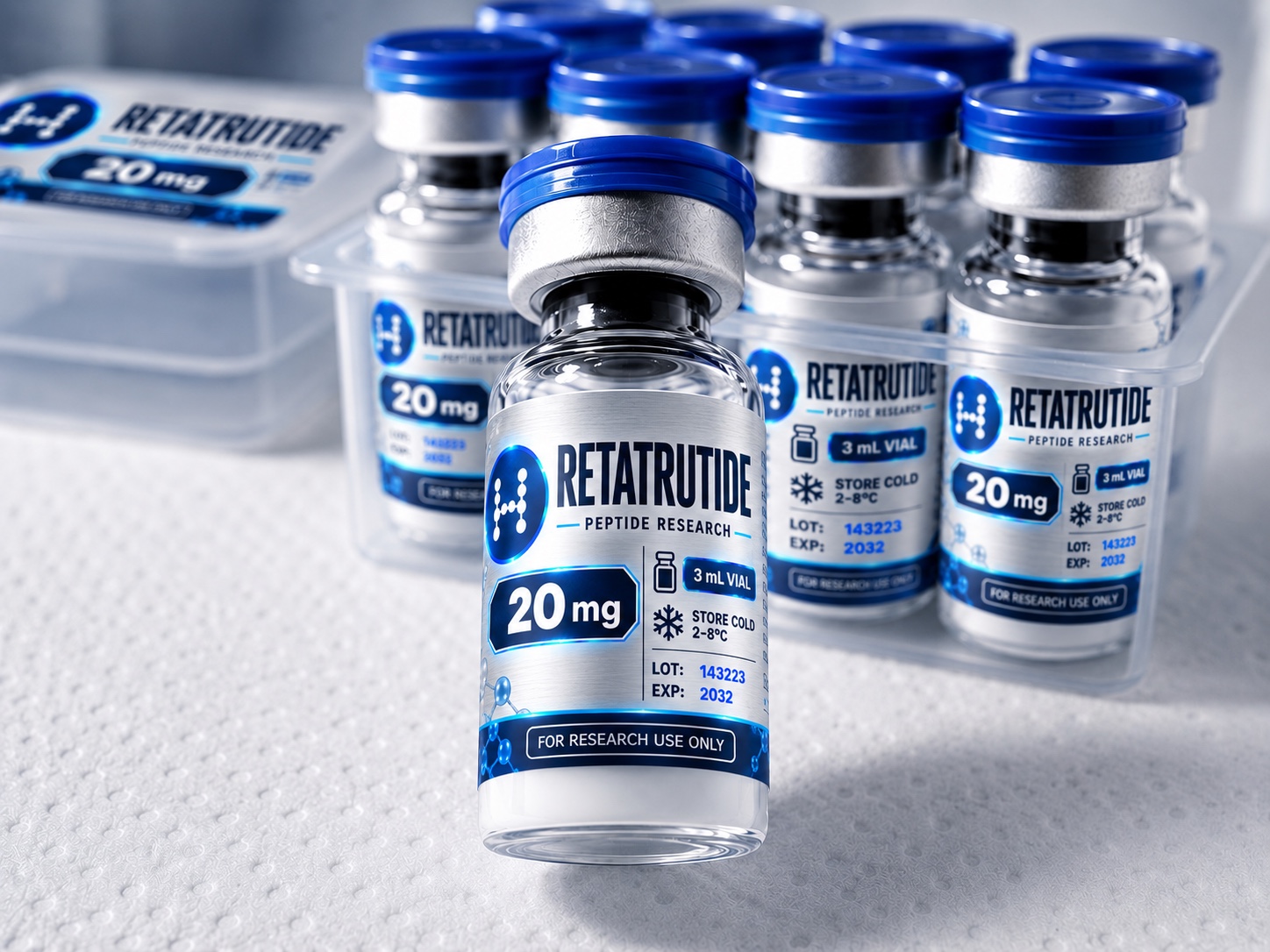
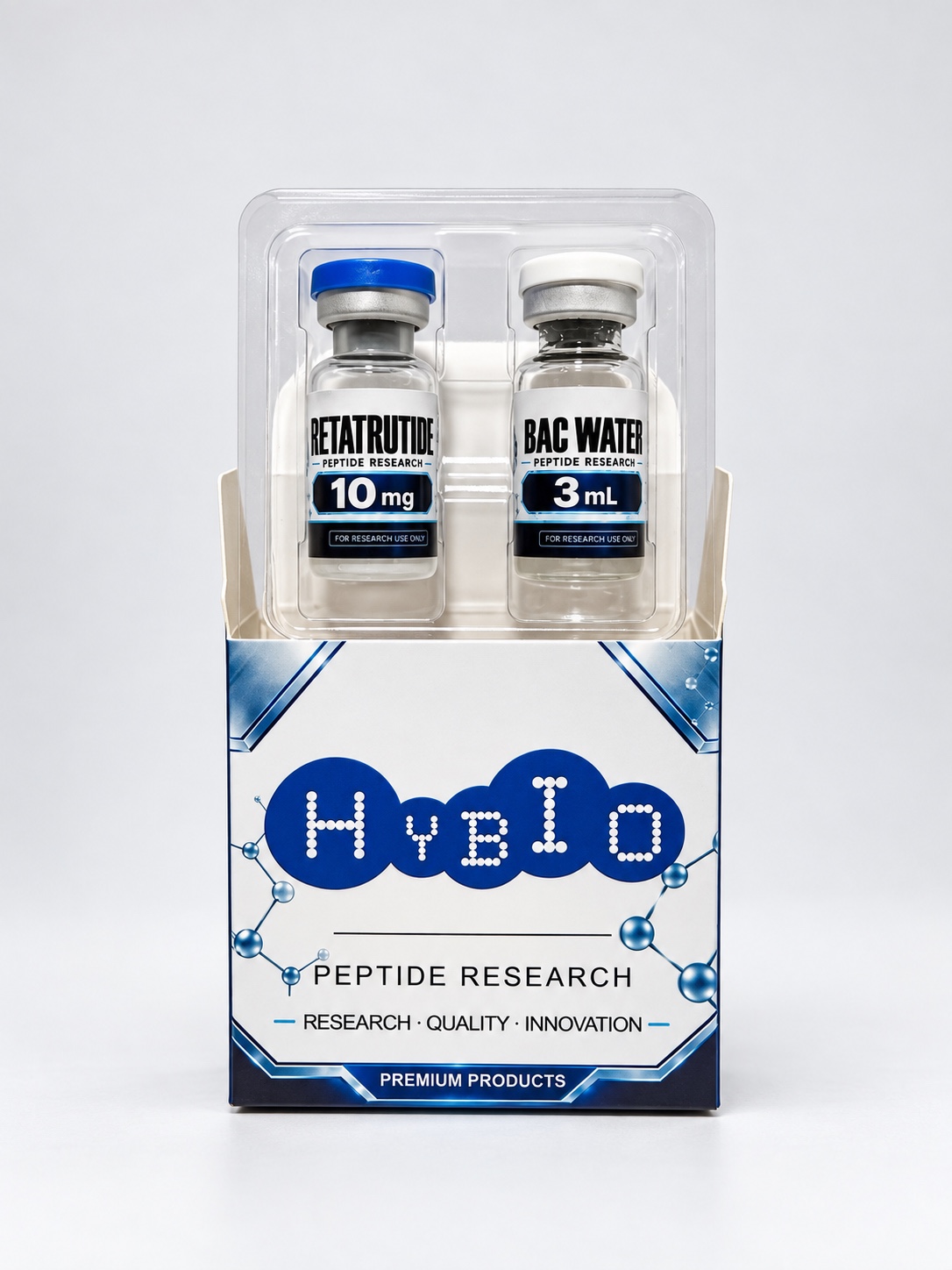
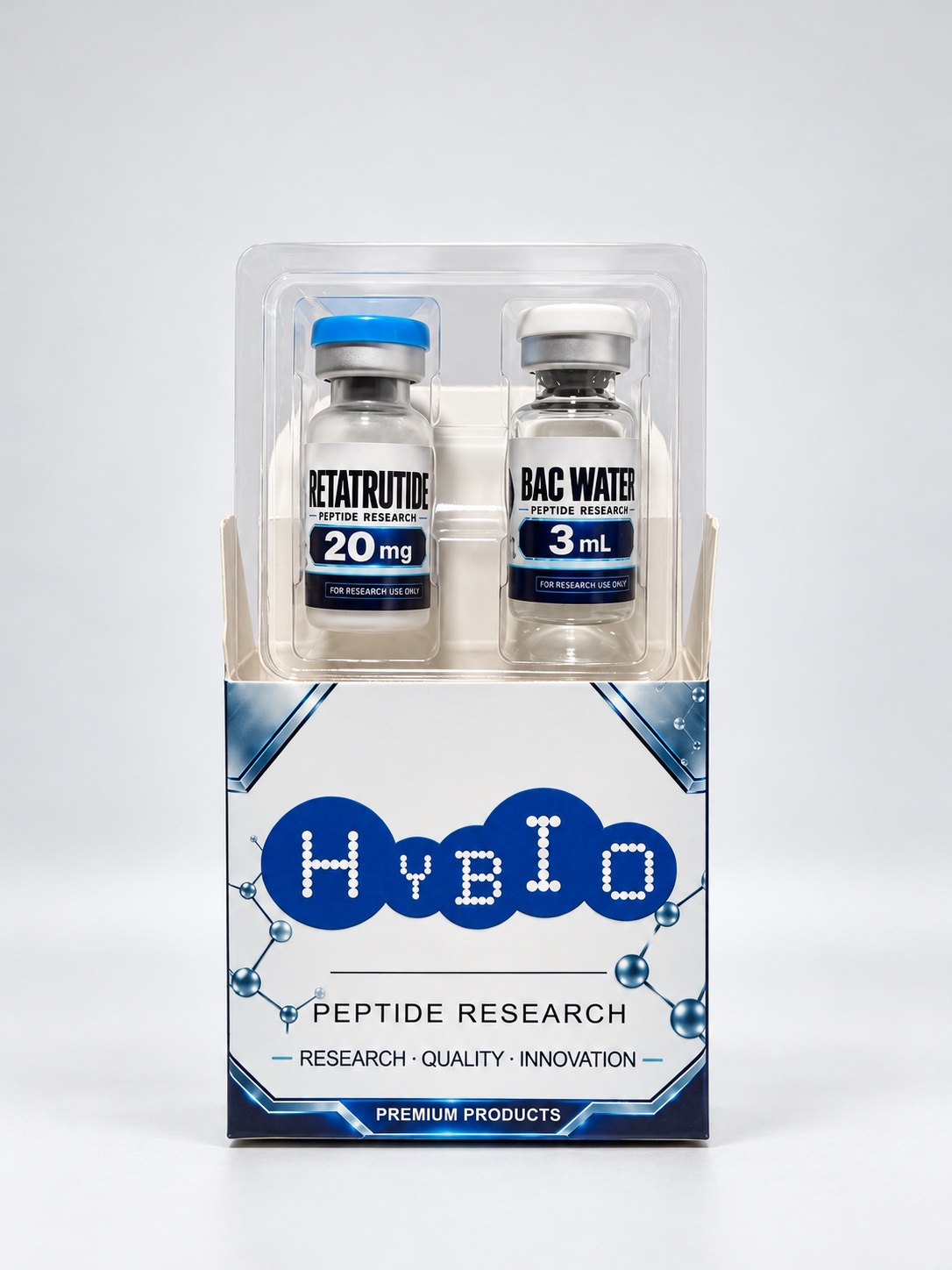
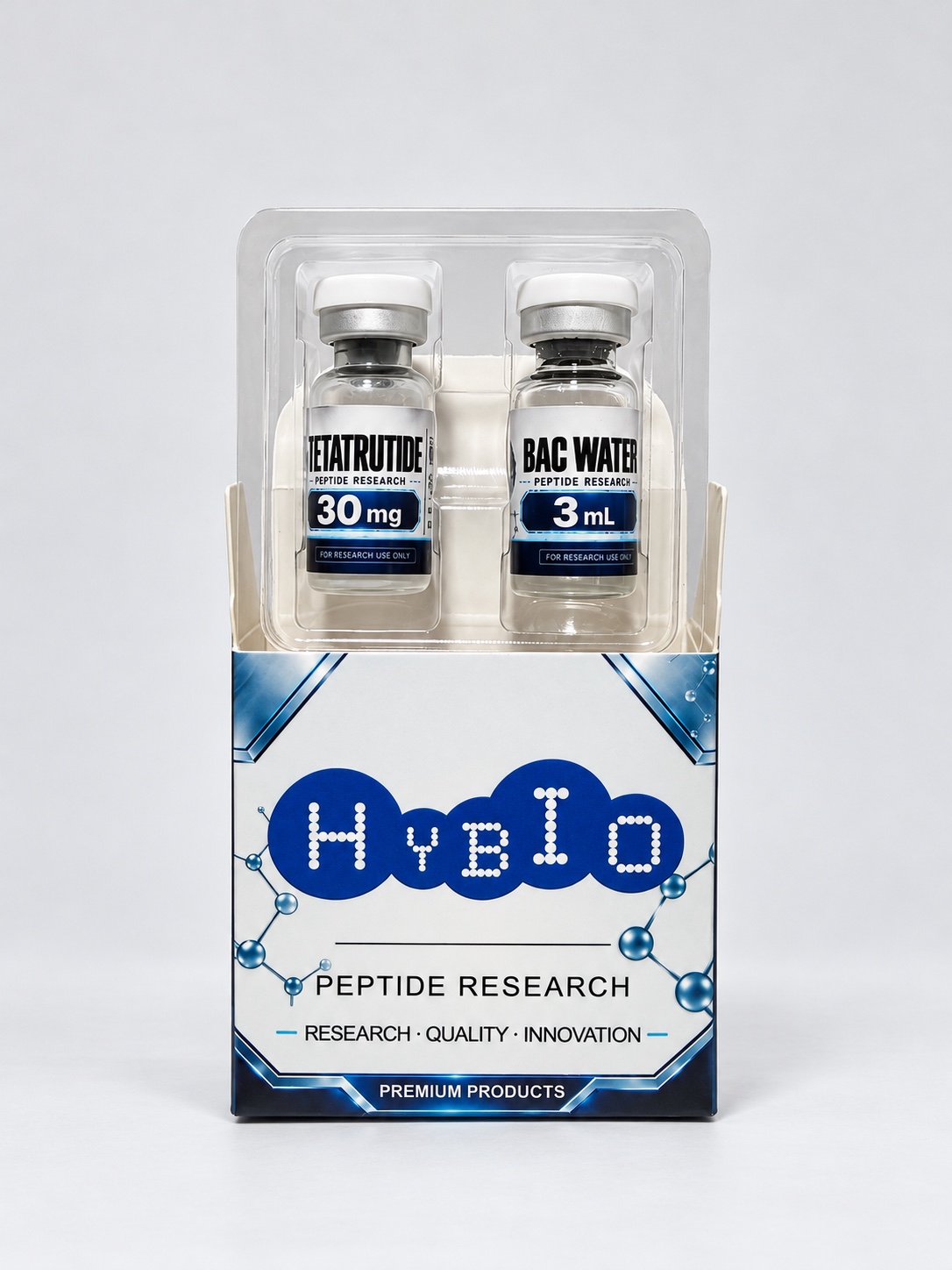
Retatrutide, also known as LY3437943, is an investigational peptide molecule developed by Eli Lilly. It activates GIP, GLP-1 and glucagon receptors. “Triple agonist” describes this mechanism; “GLP-3” is not a scientific drug class. [2]
02 / ATLAS
How it works
An agonist activates a receptor and triggers a biological signal. Retatrutide combines activity at three hormonal systems involved in metabolic regulation in one molecule. [2]
- GLP-1: a signal involved in satiety and blood glucose regulation.
- GIP: contributes to glucose-dependent insulin responses.
- Glucagon: contributes to the regulation of energy use and liver metabolism.
The mechanism cannot predict the effect in an individual. The outcome of this combination must be measured in clinical trials. [4]
03 / ATLAS
What research shows
TRANSCEND-T2D-2 directly compared retatrutide with Ozempic 2 mg in type 2 diabetes. These are sponsor-reported topline results; the full paper is planned for later.
[6]TRIUMPH-2: Lilly announced EASD presentation and simultaneous publication in The Lancet on 29 September. [3]
TRIUMPH-1 and TRANSCEND-T2D-1 were presented at ADA in June; Lilly reports publication of TRANSCEND-T2D-1 in The Lancet. [8]
The Ozempic 2 mg comparison does not compare retatrutide with Wegovy 2.4 mg or tirzepatide. Results across separate trials cannot establish a direct ranking.
04 / ATLAS
Study data
28 October 2026 · TRANSCEND-T2D-2 · Phase 3
Randomized, open-label trial in 1,298 adults with type 2 diabetes inadequately controlled on metformin, with/without an SGLT2 inhibitor; 80 weeks.
| Outcome | Retatrutide 9 mg | Retatrutide 12 mg | Ozempic 2 mg |
|---|---|---|---|
| Body weight | −19.5% | −20.9% | −9.4% |
| HbA1c (percentage points) | −2.2 | −2.2 | −1.8 |
This analysis estimates the effect had participants continued intervention without additional antihyperglycemic medication for >14 days. It does not automatically represent outcomes for all patients in routine care.
[6]Phase 2 · NEJM, 2023
338 adults with obesity, or overweight and a related condition; a double-blind, placebo-controlled trial. Weekly subcutaneous administration took place under the study protocol. The primary endpoint was weight change at 24 weeks. [1]
| Investigated dose | 24 weeks | 48 weeks |
|---|---|---|
| 1 mg | −7.2% | −8.7% |
| 4 mg* | −12.9% | −17.1% |
| 8 mg* | −17.3% | −22.8% |
| 12 mg | −17.5% | −24.2% |
| Placebo | −1.6% | −2.1% |
*The 4 and 8 mg arms pool groups with different starting doses. Values are statistically adjusted means, not guaranteed outcomes for every participant. [1]
Phase 3 · TRIUMPH-2, results published 29 September 2026
The study included 1,152 participants with obesity or overweight and type 2 diabetes. At 80 weeks, average weight reduction was −12.7% with 4 mg, −19.1% with 9 mg and −20.8% with 12 mg, compared with −4.0% with placebo. At 12 mg, 52.0% lost at least 20% of baseline body weight and 34.9% lost at least 25%. [3]
Average HbA1c decreased by 1.4, 1.6 and 1.5 percentage points with 4 mg, 9 mg and 12 mg, respectively. These results use the efficacy estimand, which estimates the effect if participants remained on the study intervention without protocol-prohibited treatments. [3]
Other phase 3 results
TRIUMPH-1: without diabetes, 80-week weight change: −19.0%, −25.9%, −28.3% with 4/9/12 mg versus −2.2% placebo (efficacy estimand). Treatment-regimen estimates: −17.6%, −23.7%, −25.0% and −3.9%. A selected extension (532 participants, baseline BMI ≥35, who tolerated treatment) reported up to −30.3% at 104 weeks at a maximum tolerated 9/12 mg; this was not the full randomized population. [7]
TRANSCEND-T2D-1: at 40 weeks, up to −16.8% weight and −2.0 percentage points HbA1c. [8]
TRIUMPH-3: severe obesity and cardiovascular disease, 80-week weight change −22.6% at 12 mg versus −3.2% placebo; topline results dated 23 July. [4]
05 / ATLAS
Safety and observed adverse reactions
TRANSCEND-T2D-2 · 28 October update
At 9/12 mg versus Ozempic 2 mg: diarrhea 28.3/32.7% versus 26.4%; nausea 21.2/23.8% versus 21.3%; dysesthesia (abnormal skin sensations) 4.8/6.5% versus 2.7%. Discontinuation due to adverse events: 4.8/7.9% versus 2.7%. The release does not provide a complete assessment of all rare risks. [6]
In phase 2, the most frequent adverse events were gastrointestinal, generally mild or moderate and dose-related. Heart rate increases peaked at week 24 and then declined. [1]
In TRIUMPH-2, the most common adverse events were diarrhea (27.4–33.6%), nausea (13.7–28.0%), constipation (14.0–16.8%), decreased appetite (5.8–17.1%) and vomiting (5.5–15.7%). Most were mild or moderate and resolved during the study. Discontinuation due to adverse events was 3.8% with 4 mg, 11.6% with 9 mg and 7.7% with 12 mg, versus 4.9% with placebo. [3]
Cardiovascular data in TRIUMPH-3 were limited; confidence intervals included no difference. They establish neither cardiovascular protection nor a definite increase in risk. [4]
Questions remain about rare risks and long-term use. A product bought online cannot be assumed equivalent to the controlled study product. [2]
06 / ATLAS
Research status
As of 1 November 2026, retatrutide remains investigational; Lilly states it is not approved by FDA or any other regulator. Positive results do not constitute approval. [6]
Lilly plans a BLA submission to FDA in Q1 2027. This is a planned submission timeline, not a guaranteed approval date. [3]
07 / REFERENCES
Studies and sources
- Jastreboff et al. · Phase 2 obesity trial, NEJM (2023) ↗Original article · randomized trial
- Lilly · What to know about retatrutide ↗Developer information · July 2026 update
- Lilly · Detailed TRIUMPH-2 results (29 September 2026) ↗Sponsor press release · detailed results, published simultaneously in The Lancet
- Lilly · TRIUMPH-2 and TRIUMPH-3 (23 July 2026) ↗Sponsor press release · preliminary TRIUMPH-3 results
- Coskun et al. · From mechanism to clinical proof of concept (2022) ↗Original article · mechanism and early research
- Lilly · TRANSCEND-T2D-2 (28.10.2026) ↗Sponsor release · topline results
- Lilly · TRIUMPH-1 (21.05.2026) ↗Sponsor release · topline results
- Lilly · ADA: TRIUMPH-1 / TRANSCEND-T2D-1 (06.06.2026) ↗Sponsor release · ADA results; TRANSCEND-T2D-1 published in The Lancet